01
When is Summer?
The summer season starts at the beginning of July and runs until the end of August, sometimes even into September. It can start a few weeks earlier or later than July 1st, depending on the year. Recently, summer has been starting earlier, so if you plan your trip in July, you are almost certain to experience summer conditions.

02
When is Autumn?
The first autumn colors start appearing at the beginning of October and can last until mid-November. However, autumn can end abruptly with a big snowfall or strong winds, which can quickly strip the trees of their colors. Sometimes autumn arrives late as well. For example, in 2023, autumn started around October 20th, but just a week later, a major snowfall marked the start of winter. If you are serious about capturing the autumn colors, allow for a flexible schedule to accommodate potential delays or changes in conditions.

03
Weather Conditions
Summer
You can except a mix of sun and rain, with transitions between the two often providing the best photography conditions. Afternoon rain showers are common due to rising warm air forming cumulus clouds, which can create spectacular thunderstorms. These storms are common during the day and late-afternoon but often clear up by sunset, leading to dramatic skies with distant rain clouds. Early mornings can bring fog, formed from the previous night’s rainfall. Extended sunny periods without clouds are possible but not very likely. Similarly, prolonged rainy periods (a week or more of non-stop rain) are rare but can happen. The weather in the Dolomites is unpredictable—snow can even occur at higher elevations (2,500m) in the middle of summer, though this is uncommon. Daytime temperatures range from 10°C to 30°C.

Autumn
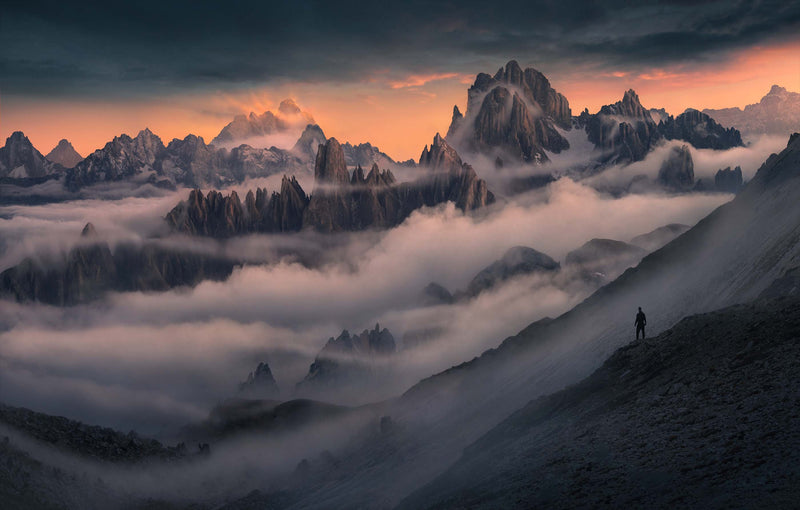
The weather is more stable and less extreme than in summer due to the lack of drastic temperature changes. Cumulus clouds, rain showers, and thunderstorms are less frequent. A good balance of sun and clouds makes for excellent photography conditions. Nighttime temperatures often drop below freezing at higher elevations (2,000m and above). Lakes often start freezing around mid-October or later. Light snowfall can add a beautiful touch, but it melts quickly from trees once the sun comes out so you have to be quick to photograph it. Mist is more temperature-dependent in autumn than in summer but can still form at higher elevations. Daytime temperatures range from 6°C to 20°C.

04
Foreground Options
Summer
• Wildflowers: More than 800 species of wildflowers bloom in the Dolomites. Popular varieties include Soldanella Alpina (Alpine Snowbell), Papaver Alpinum (Alpine Poppy), and Cyclamen.
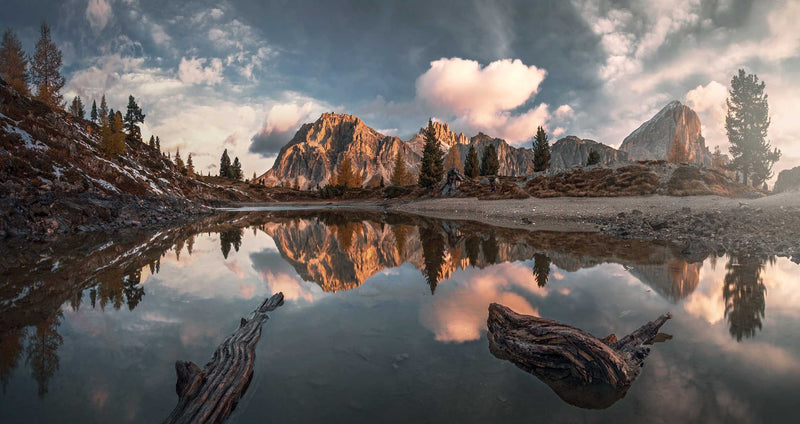
• Lakes and pools: Great for reflections.
• Water streams: Temporary streams appear after significant rainfall, providing excellent foreground options. These streams can disappear within a day if conditions dry up.

Autumn
• Colorful trees dominate the mid-ground.
• Tree roots can serve as natural leading lines.
• Lakes with fallen tree trunks can add to the autumn mood.
• Water streams are still an option but are less common than in summer.
• Fewer foreground options make composition more challenging in autumn.

A note on water streams: Many of the rocks in the Dolomites are made of limestone or granite. Due to the permeable nature of limestone, waterways aren’t common as the water passes through the rock. There must be significant rainfall for waterways to form, but when they do, they are incredible to photograph. For example, Max went up Drei Zinnen and took the below photos of temporary water streams. During normal to dry periods, these streams do not exist. The stream you see in this photo was 80% gone by the following day.

05
Best Photography Locations
Summer
Passo Gardena: Peaks are beautifully illuminated at sunrise and sunset, with thousands of flower options in the foreground. In autumn, this location lacks light on the peaks, and foreground options are very limited.

Alpe di Siusi: This location receives perfect misty conditions in summer and if you hunt for them you may find patches of wildflowers too.

Passo Giau: Often filled with fields of wildflowers and no hiking involved, Passo Giau is the perfect location for summer photography.

Autumn
St. Johann Church: The colorful trees create a strong contrast against the dark green evergreens. Mist adds extra depth. In summer, this contrast is absent since all trees are green.

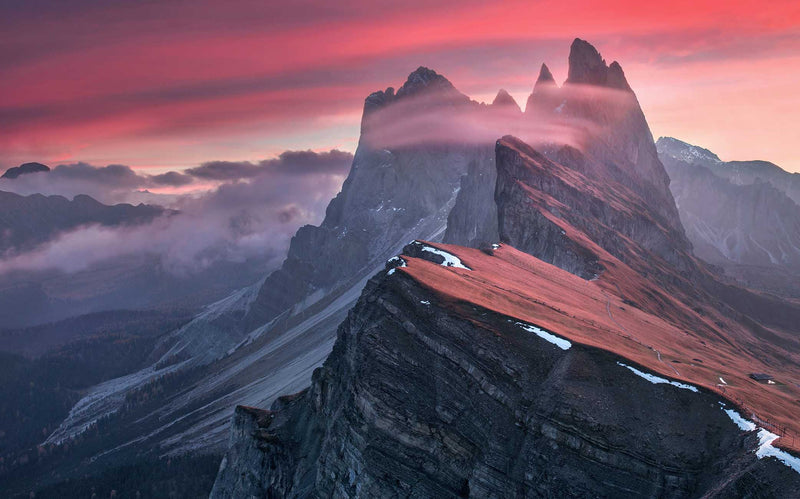
Seceda: The sunrise angle in autumn creates excellent depth. In summer, the sun rises too far to the left for optimal lighting. In fact I rate this location so highly I have written an Ultimate Photography Guide to Seceda.

Other Considerations
Crowds: Summer sees more tourists, but sunrise and sunset are generally quiet. In autumn, you may find more landscape photographers at popular locations.
Accommodation: Summer is peak season, making accommodations more expensive. In autumn, prices may be lower, but some accommodations close for the season.
06
Final Thoughts
Both summer and autumn offer unique opportunities for photographers and travelers in the Dolomites. Summer is vibrant, with lush greenery, wildflowers, and dynamic weather conditions that create dramatic skies. Autumn, on the other hand, transforms the landscape with stunning golden hues, misty atmospheres, and a more peaceful experience.
If you love capturing vivid landscapes, reflections in lakes, and wildflower foregrounds, summer is the perfect time for you. If you prefer moody scenes and striking fall colors which the Dolomites are renowned for, autumn will provide a completely different but equally beautiful experience.
Since both seasons offer vastly different conditions, visiting in both summer and autumn is highly recommended to fully appreciate the Dolomites' diversity. No matter when you go, flexibility is key—Dolomites weather is unpredictable, and waiting for the right conditions can make all the difference in your photography. At the end of the day, the best season depends on your creative vision and what kind of experience you’re looking for.
Planning a trip to the Dolomites? Read more about our tours here!