


01
Achieve Balance in Your Composition
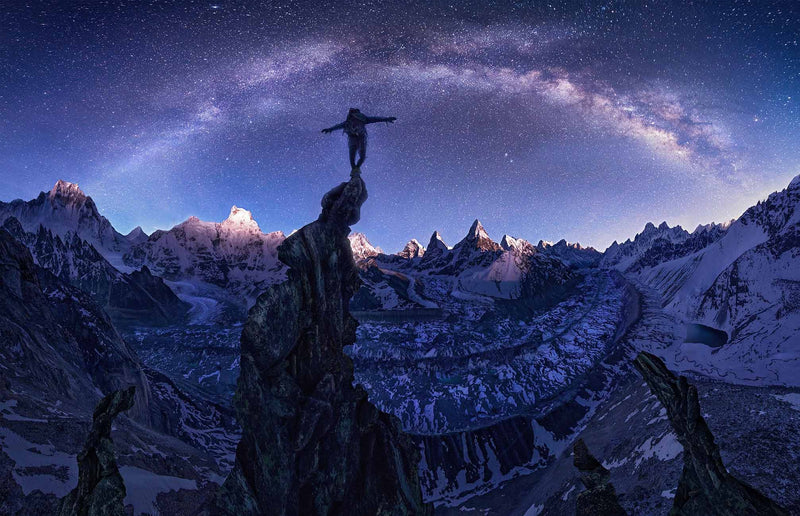
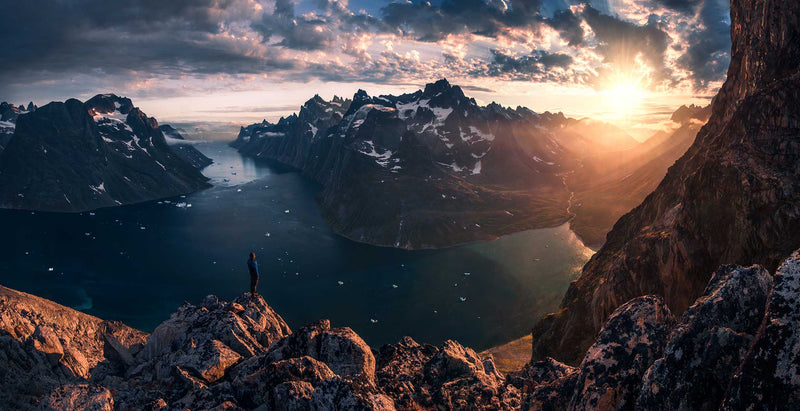
A well-balanced composition is essential for creating visually striking and harmonious images. When framing a landscape, such as a range of mountain peaks, positioning the highest peak at the center of the frame can create a strong focal point. However, balance doesn’t always mean perfect symmetry—if your primary subject is off-center, like a lone figure standing on a rock, you can counterbalance it with another point of interest on the opposite side, such as a dramatic sunset or an interesting cloud formation. This ensures that no part of the image feels overly heavy or empty.

Symmetrical compositions, on the other hand, can be particularly powerful because they naturally convey a sense of stability and equilibrium. The human eye is naturally drawn to symmetry, making it an effective way to create visually appealing images. However, asymmetrical compositions can also be compelling when executed well. A dynamic balance, where different elements in the frame work together harmoniously, often leads to the most engaging photographs. The key is to observe your scene carefully and make intentional choices about where to place key elements within the frame.

For those who want to dive deeper into mastering composition, we have an article on Composition Techniques which details composition in landscape photography in more depth.
02
Use Leading Lines to Guide the Eye
Leading lines are one of the most effective techniques for drawing the viewer’s eye through an image and toward the main subject. These lines can take many forms—meandering rivers, roads, tree trunks, fences, or even cracks in dried mud. By naturally guiding the eye from the foreground to the background, leading lines create depth and enhance the sense of movement within a photo.

One effective way to use leading lines is to experiment with different angles and perspectives. A low camera angle can emphasize the strength of a leading line, making it more dominant in the frame. Conversely, a higher vantage point might allow the lines to converge in a way that adds even more depth to the image. The decision should be made based on how the leading lines look further away from the foreground. If you only have a strong leading line within a few meters from the camera, go for a lower postion. If there are also incredible leading lines beyond that point, go higher to make them visible. Whether you’re photographing a vast landscape or an intimate close-up, always be mindful of natural lines that can enhance your composition.
Leading lines can also add a sense of storytelling, subtly directing attention to the most important elements of the scene. For example, a winding river leading toward a towering mountain peak naturally guides the viewer’s gaze, creating a sense of journey and exploration. Similarly, paths, bridges, or even shadows can serve as leading lines that enhance the composition.

03
Incorporate Natural Framing (When It Works)
Natural framing—such as trees, caves, or mountains—can add depth and focus to your composition, but it's not always necessary. Unlike balance, framing is an optional enhancement rather than a requirement for a strong composition. If you’re in a location like Patagonia, where forests and unique trees are everywhere, you’ll often find great opportunities for natural framing. However, in places like Saudi Arabia, even though there are many beautiful trees, it can be difficult to find a frame with a tree that works. In this case, caves may provide a better framing opportunity.

Finding cave views in Saudi helps to frame subjects.
The key to effective natural framing is subtlety. If it feels forced when you take the photo, it will likely look forced too. A well-placed natural frame should complement the scene rather than dominate it. It should help direct the viewer’s attention toward the main subject without overpowering it. For example, using tree branches to frame a mountain peak can create a sense of depth, but if the branches take up too much of the frame, they may distract from the subject rather than enhance it.
Another important consideration is how framing interacts with light and shadow. A natural frame that is too dark may create an unbalanced composition, while one that is too bright might detract from the main subject. Experimenting with different exposures and compositions can help you find the perfect balance.

04
Pay Attention to Light
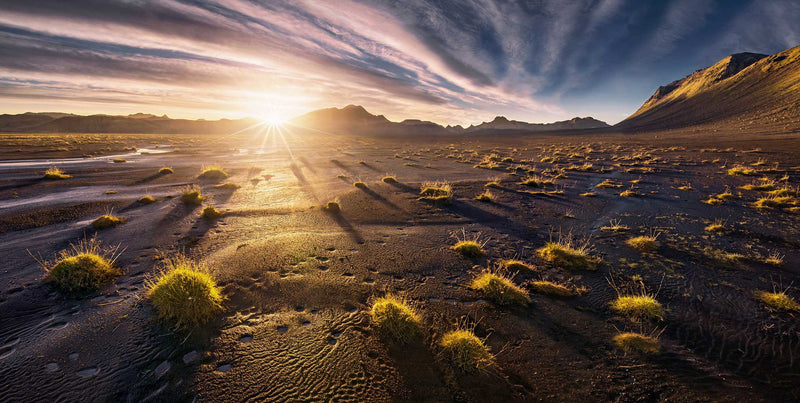
Light is one of the most crucial elements of composition. If the setting sun is within your frame, it becomes a strong focal point that can redefine balance. Similarly, a dramatic rain cloud or a rainbow can add unexpected elements that enhance your shot. This is the kind of photography you can’t always plan—sometimes, familiar locations look entirely different because of the way light interacts with the landscape.
Another important consideration is how light affects depth. If the sun is setting in front of you, the layers of the landscape will be visible, adding depth to the scene. At the same time you will lose detail and colors on the texture. This is also called backlit. This light is desirable when you have a lot of layers in the scene - which is often the case when shooting on top of a mountain. If the sun is rising or setting behind you, the subject (like a mountain) will be illuminated and show colors and detail. When the light is behind you on an angle you will have both colors, detail and depth on the mountain itself. Always consider how light influences the composition before taking the shot.

The sunrise creates depth, detail and color on the mountains of Fitz Roy because the sun rises from an angle.
The best landscape photographers understand that light is not just a technical factor—it’s an artistic tool. By paying attention to how light changes throughout the day, you can create compositions that evoke different emotions and moods. Soft morning light creates a serene, dreamy quality, while harsh midday light can result in dramatic contrasts, especially with the right cloud coverage. Experimenting with different lighting conditions will help you develop a deeper understanding of how to use light to your advantage.

05
Don’t Rely on a Tripod Too Soon
Use your tripod only as a final step! Before setting it up, walk around, explore different perspectives, and experiment with compositions at various heights and angles. Too many photographers arrive at a location and immediately set up their tripod, limiting their ability to adjust their composition freely. By staying mobile, you give yourself the chance to find the best balance, light, framing, and leading lines before committing to a final shot.
If you want to create a stable position for your camera but don’t want the burden of carrying and setting up a tripod, try using your body as a makeshift tripod. You can use your legs as a frame and balance the camera on your knees or even on the top of your foot. It may sound unconventional, but all you need is a stable position to take the photo. Using your body for stability is much more efficient and can be just as effective as an actual tripod. Alternatively, you can use a rock, tree, or nearby surface to act as a stable point for your camera.

06
Conclusion
In summary, a great composition is about more than just pointing your camera at a beautiful scene. By focusing on balance, leading lines, natural framing, light, and staying mobile before setting up your tripod, you can create more dynamic and engaging photographs. Max Rive’s approach encourages creativity and exploration, helping photographers make the most of every moment in the field. So next time you're out with your camera, keep these tips in mind—and see how they transform your shots!




Share your experience, ask a question, or tell us what you would love to photograph.