


01
What is a Wide-Angle Lens and Why Should I Have One?
My definition of wide-angle is 14–30mm, and anything below 14mm I consider ultra-wide. However, this differs slightly from the common classifications, which usually define 24–35mm as wide-angle, 16–24mm as ultra-wide, and anything below 16mm as extreme ultra-wide. Honestly, I don't think the exact labels matter, it really depends on how you like to shoot and what kind of look you're going for. I personally shoot a lot in the 10–24mm range, so my "normal" might be different from yours. The point is - you should have a wide-angle lens! A wide-angle lets you get close to your foreground and create strong leading lines in your landscape photography which brings depth, and a sense of scale to your shots.
When choosing a wide-angle lens, I look at factors like weight, price, focal range, and image sharpness. While f/2.8 is great, especially for those who shoot a lot at night, it’s less important to me since I rarely do night photography. So, I tend to prioritize other features over aperture speed.

Wide angle is best for capturing the long reaching branches of the Fanal forest.
01
Nikon AF‑S NIKKOR 14‑24 mm f/2.8G ED
Overview & Specifications
It’s a wide-angle zoom lens for Nikon F‑mount full‑frame (FX) cameras, a constant f/2.8 maximum aperture and an optical formula comprising 14 elements in 11 groups, including two ED glass and three aspherical elements, along with Nano Crystal Coat to minimize aberrations and flare. Closest focusing distance of 0.28 m (0.9 ft).

One of my favourite pictures taken with this lens.
Build & Handling
Solid build, but heavy at 970–1000 g, and without filter threads, filters require a special holder. Professional-grade dust and moisture sealing. I have used this lens in all kinds of weather conditions and it's built like a brick, dust and water can't penetrate it!
Optical & Autofocus Performance
Renowned for edge‑to‑edge sharpness, particularly when stopped down. No image stabilization.

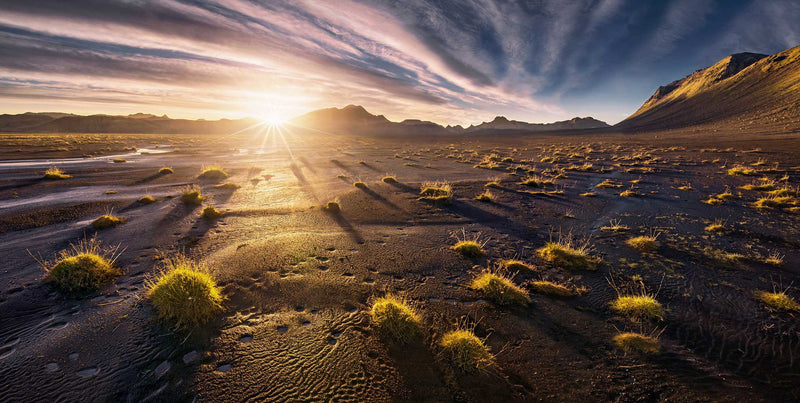
Taken with this lens in the highlands of Iceland at sunset.
Community Insight
Having used this lens for roughly six years I can agree with some users who report stiff zoom rings and wear over time as I experience this myself. I always thought it was because I am but tough on my gear but I think it's quite normal for this lens. It definitely doesn’t impact on quality or life length though. It is a really great lens and I got a lot of use out of it, many of my portfolio images were taken with it.

Also taken with this lens one of my favourite images of all time! Patagonia, Cerro Torre in winter.
Pros: Legendary performance, wide coverage, excellent image quality!
Cons: Yes it is heavy, especially when you compare it's weight of 970g to the Z14-30mm lens which is only 485g! It also has no filter thread.
02
Nikon NIKKOR Z 14‑24 mm f/2.8 S
Overview & Specs
Very similar to the AF-S in some ways. The Nikon NIKKOR is a full-frame (FX) ultra-wide zoom with a constant f/2.8 maximum aperture. 14–24 mm, featuring 16 elements in 11 groups, including 4 ED glass and 3 aspherical elements, and advanced coatings like Nano Crystal and ARNEO for superior optical performance. The lens is notably compact and lightweight for its class—approximately 650 g—and supports 112 mm screw‑in front filters (when using the included hood) as well as rear gel filters.
Build & Handling
High‑quality S‑Line build, balanced on Z bodies; features control ring, buttons, and full weather sealing. Sharpness is great, also in the corners. It can’t get much better than this in terms of the handling, super easy to use.
Optical & AF Performance
Considered sharper than the AF‑S version, better contrast, lighter, and more convenient to use with filters.
Pros: Excellent sharpness (the best) modern handling, sealed, lighter, filters.
Cons: Expensive (around €2200), the 14-24mm could have a bigger range (like the 14-30).
03
Nikon NIKKOR Z14‐30mmf/4S
Overview & Specs
This Nikon NIKKOR Z14-30mm is another another full-frame (FX) ultra-wide zoom, but with a constant f/4 maximum aperture. This lens has a bigger range of 14–30mm. It is featuring 14 elements in 12 groups, including 4ED glass and 4 aspherical elements, and has advanced coatings like Nano Crystal and a fluorine-coated front element. The lens is the lightest of its class—approximately 485 g—and supports 82mm screw‐in front filters (when using the included hood) as well as rear gel filters. This is my current lens that I have been using for the past two years and I consider it an amazing lens! Many of my recent portfolio images are taken with it.

Build & Handling
The lens is lightweight, but even more impressive are the small dimensions. This is because the lens is collapsible. You need to extend it when using 14mm. This feature is great for when you have a lot to pack in a small bag which I do often. I also think it helps prevent the lens getting knocked about and since I can be tough with my gear, this is great for me.
Optical & AF Performance
Considered sharper than the AF‐S version, better contrast, lighter, and more convenient to use with filters.
Pros: Excellent sharpness, very compact and lightweight, screw-in front filters, 14 to 30 mm range.
Cons: Distortion is big (but who cares on wide-angle), sharpness in corners is just a tiny bit less than the 14-24mm. I don't notice the lack of sharpness in corners too much.

04
Tamron SP 15‑30 mm f/2.8 Di VC USD
Overview & Specs
Full‑frame ultra‑wide zoom notable for including built‑in image stabilization (VC), a rare feature in this range. Maintains a constant maximum aperture of f/2.8. Comprising 18 elements in 13 groups. I have used this lens for over eight years in combination with my Nikon D810 and D850. Great sharpness, comparable quality to the 14-24mm. I do miss the extra mm (from 14 to 15) of the 14-24 more than I appreciate the 6 extra (24 to 30). The lens never had any technical issues and felt more robust than the 14-24mm. It has great sharpness and I really enjoyed shooting with it. Madison has been shooting with it the past year and it's still producing banger shots even though it is eight years old now, so definetly is durable considering how I treat my gear.

Build & Handling
Robust, weather‑sealed construction; heavy at around 1.1 kg Madison considers this lens an upper body workout especially when you pair it with the Nikon D810 body.

Optical & AF Performance
• Sharp center; edges improve when stopped down (peak around f/5.6–f/8).
• Very good CA, flare and distortion control, slight corner shading wide open.

Pros: Stabilized, fast aperture, excellent value versus OEM lenses.
Cons: Heavy!! No filter thread; slight edge softness wide open.
05
Sony FE 12‑24 mm F4 G
Build & Handling
Compact and lightweight (~565 g), dust/moisture‑resistant, with built‑in hood; solid but plastic.
Optical & AF Performance
• Sharp center even at f/4; corners improve at f/5.6.
• Excellent optical formula with multiple ED and aspherical elements, Nano‑AR coating.
• Some falloff, distortion, and light fall‑off wide open.
Community Insight
Many users opt for the f/4 G instead of the pricier f/2.8 GM and state diminishing returns for slower speed. Honestly I haven't used this lens other than when clients have had it on tours. They were well pleased with it especially for its lightness. Unfortuantly for this lens it was released at the same time as the Sony 16–35mm f/2.8 G which is considered a superior lens. It has a faster aperture and more highers specification overall. Even so a higher price and specs list doesn't always mean a huge gap in ability. The 12–24mm is wider which I prefer and clients have rated it so it's on the list! If you are interested in this lens check out a more in-depth review by Admiring Light.
Pros: Compact, sharp, great portability.
Cons: No stabilization; requires stopping down for best sharpness.
06
Canon RF 10‑20 mm F4 L IS STM
Overview & Specs
Canon’s ultra‑wide RF‑mount L‑series lens, notable for its compactness, built‑in Image Stabilization (5–6 stops), and STM focus.
Build & Handling
Lightweight at 570 g, sealed from the elements, with control ring and function button. Uses rear gel filters. Smaller/lighter than the RF 15‑35 so consider better to some people for that reason.
Optical & AF Performance
Outstanding optics; wide coverage; relies on digital correction for distortions.
Community Insight
Users praise the minimal distortion after profile correction and highlight its real‑world usability. Since I don't have any personal experience with this lens I will refer to a review that I found worthwhile reading from Learn Photography Skills.
Pros: Widest RF zoom, image stabilization, lightweight, sharp.
Cons: Pricey at around €2500 euro on some sites. Some people complain that it is less versatile beyond very wide angles. I like to shoot in this range a lot so that doesn't bother me but some clients have complained they miss having an extra 4mm.
07
Fujifilm XF 10‑24 mm F4 R OIS WR
Overview & Specs
APS‑C ultra‑wide zoom with OIS and weather resistance—excellent value for Fujifilm users.
Build & Handling
Super compact at 385g , metal mount, sealed, filter threads supported.
Optical & AF Performance
• Sharp center; edges benefit from stopping down (f/5.6–f/8).
Community Insight
Highly popular for travel and everyday use. I had a client bring this lens on a tour once and they really loved it, especially with the ND filters. It has good sharpness in the lower ranges but at 24mm it was noticeably softer in the edges. As an all-in-one lens it's pretty good, especially if you are Fujifilm fan and want something lightweight and for everyday travel pictures. Here is a good review which is more in-depth if you are seriously considering this lens from Exposure Therapy.
Pros: Compact, sharp, stabilized, affordable.
Cons: Some edge softness at long end; f/4 only.
08
Comparison Table
| Lens | Stabilization | Weight | Strengths |
|---|---|---|---|
| Nikon 14‑24 F2.8 (AF‑S) | No | 1 kg | Legendary sharpness |
| Nikon Z 14‑24 F2.8 S | No (IBIS on camera) | 650 g | Modern build, superior optics |
| Nikon Z 14‑30mm F4 S | No (IBIS on camera) | 485 g | Compact, sharp, filter thread, travel-friendly |
| Tamron 15‑30 F2.8 VC | Yes | 1.1 kg | Affordable, stabilized, fast |
| Sony FE 12‑24 F4 G | No | 565 g | Ultra‑wide, compact, sharp |
| Canon RF 10‑20 F4 L IS STM | Yes | 570 g | Widest RF zoom, IS, L build |
| Fuji XF 10‑24 F4 OIS WR | Yes | 385 g | Compact, stabilized, great value |
09
Bonus Ultra-wide Laowa 10mm f/2.8 Zero-D FF
I have to give a special bonus mention to this lens because I only purchased it recently but absolutely love it. The Laowa 10mm is a great ultra wide angle especially for locations like Saudi Arabia where you want to get super close to the mountain and use large foreground like caves for example.
Using an ultra wide you allows you to have more space for foreground while still having the full mountain in frame. You can also take a panorama which is what I often have done in the past, but by having this lens you can actually see the whole picture in one shot which is much easier to shoot. This particular lens I purchased from a client on our most recent Saudi Arabia Tour since I just had to have it! The pro's are that it gives a really good sun-star, the distortion is manageable and it is super sharp. It also has f/2.8 which is good for night photography.
The con's are that is doesn't have any other range, so 10mm is all you get. But if you already have a bunch of wide lens and are just missing an ultra wide, then you don't actually need more range. Just swap to the 10mm when you need it. The other con is that it doesn't focus well in low-light conditions, so if you are trying to shoot your foreground pre-sunrise it can be difficult. It is also pretty light at only 420 g.
10
Final Thoughts
If you're after the best overall quality and price isn't a concern, the Nikon Z 14‑24mm f/2.8 S stands out with its excellent optics, weather sealing, and top-tier performance for mirrorless systems.
For those looking for the best value with built-in stabilization, the Tamron 15‑30mm f/2.8 VC offers a great balance of performance, affordability, and vibration compensation.
But my personal favorite is the Nikon Z 14‑30mm f/4 S. It's lightweight, sharp, travel-friendly, and fits my shooting style perfectly, especially when portability and versatility matter most.






Share your experience, ask a question, or tell us what you would love to photograph.