


01
Build a Strong Portfolio
My first piece of advice is to invest time and effort into developing your skills as a landscape photographer. You need to create a stunning portfolio that showcases a variety of landscapes and demonstrates your location knowledge. You may choose to focus solely on your home country or a specific region, but your portfolio will be stronger if you also travel to new places. This allows you to showcase different environments and expand your expertise in the process. Diversity doesn’t mean you need to branch into other genres like portrait or wildlife photography. Instead, it means exploring different aspects of landscapes—mountains, waterfalls, cliff sides, forests, coastlines, and so on. Doing this will inevitably strengthen your skills.

As you progress, you’ll naturally build both your landscape photography portfolio and a social media presence. Aim for a cohesive “look” across your work, which can be achieved through a consistent editing style.

Avoid simply copying others; that won’t set you apart. Instead, invest in tutorials, learn editing techniques, and gradually develop your own style. Inspiration is important, and practicing to achieve certain looks is valuable, but your work should still feel original to you. You should enjoy the creative process just as much as the final result. This is probably a good time to mention I have plenty of editing tutorials if you want a place to start.
02
Social Media
Yes, you will need social media accounts, and the platforms continue to grow and shift as new sites emerge. Back when I started, the only available site to post landscape photos was 1x.com. Now there are multiple platforms, including Instagram, 500px, Behance, and Rednote, to name a few.
Don’t stress about posting a certain number of times per week just to satisfy the algorithm or go viral. In fact, I recommend not putting too much effort into this at the start—just post consistently. If you become good enough at photography, popularity will come in time. If you focus only on playing the engagement game, you’ll spend countless hours doing that instead of investing in your photography or growing your business in more meaningful ways. In the beginning, your main goal should be building a strong portfolio, not chasing likes or virality. Once you have years of work and an established collection of photos, you can always re-post your original content when you have a larger following.

September
KAZAKHSTAN TOUR
Limited spots
03
Make a Website for Yourself
Speaking of websites, it’s important that you have one! You can use any website builder—there are plenty of easy-to-use options with convenient setups and well done preset designs, such as Squarespace or Wix. Having a website will instantly make you appear more professional and approachable. More importantly, it gives people the chance to view your work in higher resolution than social media platforms allow. My advice is to go for a template based website over a unique personalized website. The latter costs time and money and don’t always look or perform better.

04
Make Content
Another way to increase your online presence as a professional landscape photographer is by creating content! Now that you’ve spent years developing your photography skills, you’ve built a lot of knowledge—and sharing that knowledge can help you make money or attract people to your business. There are many ways to do this: writing blogs to generate traffic to your website, creating tutorials (and releasing snippets on YouTube), or even publishing full tutorials on YouTube as a way to get monetized. All of these are effective ways to reach a bigger audience. You can also build a newsletter that people sign up for through your website, which is a great way to promote yourself and your products.
YouTube is a great platform to share longer length videos and tutorials.
05
Concentrate on a Niche in Landscape Photography
Having a niche has always been important for standing out from the crowd—but right now, it’s especially crucial because landscape photography is saturated. The number of people offering landscape photography content and landscape photography tours compared to the number of actual photographers wanting to go on tours and people wanting to buy prints etc is unbalanced.

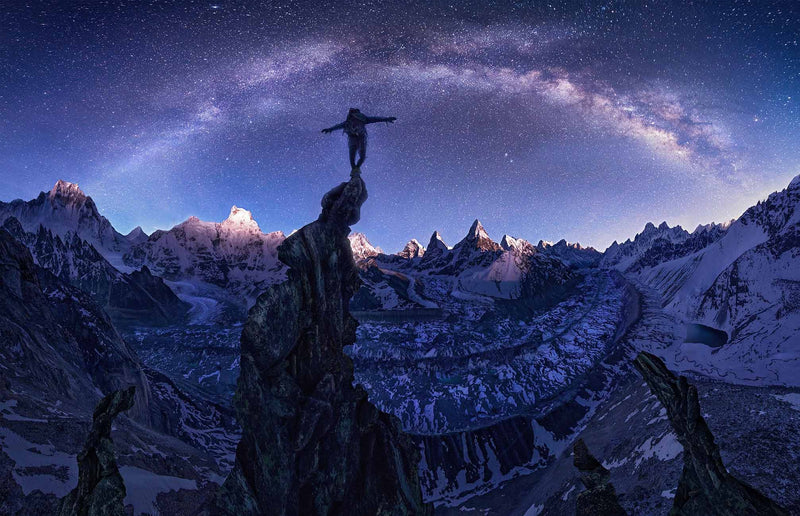
A niche could be, for example: high-mountain selfies, night photography, ice photography, aerial photography, or specialized workshops in a particular region where you’re the expert. This can set you apart as a professional landscape photographer and become the thing people recognize you for.
06
Consider Guiding Landscape Photography Tours
Once you feel confident enough to be a landscape photography workshop leader or organizer, start by guiding tours for others. This will help you connect with potential future clients and give you valuable experience in the logistics and responsibilities involved in running a tour.

Make yourself a checklist of requirements when looking for this type of work. For example:
• Will you be paid fairly? Guiding landscape photography tours is hard work and should come with proper compensation—typically between €400 and €1,000 per day, depending on your reputation and the tour price charged to clients.
• If you do find a job working for someone guiding their tours, check what does the contract saying regarding running your own tours. Some companies include clauses that prevent guides from running their own tours once they leave, especially in those locations which you have been touring for that business. Think carefully about how that might affect your future plans.
If you’re truly serious about leading your own tours, you may want to jump straight into running them yourself. However, collaborating with other landscape photographers or gaining experience by guiding for an established company is an excellent way to build your name and learn the ropes before going independent.

07
Focus on Marketing your Landscape Photography
I recommend hiring a marketing company or an individual skilled in marketing to promote your landscape photography products. Your profit may still be higher without this expense—but the main reason to do it is to drive traffic to your website and collect subscribers. Think of it as an investment that will pay off in the future. There are many forms of marketing in this digital age and some will work and others won’t. It’s about trial and error with marketing since we rely on algorithms to get our work seen in the first place, the same applies when promoting your products online.
08
Don’t Quit Your Day Job!
Yes, landscape photography takes passion and commitment, but it also takes time to build a large enough following to make it a stable source of income. My advice is to keep another job on the side when you’re starting out. Jumping into landscape photography full-time right away isn’t ideal, as it puts too much pressure on achieving success—and that pressure can cause you to lose the enjoyment and forget why you started in the first place. Having a side job allows you to take the time you need without unnecessary stress. It gives you the freedom to develop your style without having to focus on the commercial side (just yet). For example, I began as a uni student and pursued landscape photography as a hobby for six years before running my own workshops.

09
Go on Landscape Photography Workshops
This may seem obvious, but if you’re thinking of running photography workshops, you should definitely attend a few yourself first! You wouldn’t start a DJ business without ever going to a party. By attending one or more workshops, you’ll learn how to guide effectively and connect with other landscape photographers. You’ll also have the opportunity to make valuable new connections. Additionally, observing others can teach you what approaches you don’t want to take, helping you shape your own style and methods.

10
Newsletter Subscribers
Firstly, regarding newsletter subscribers. Once you start collecting newsletter subscribers, it’s important to know how to manage and engage them effectively. Your newsletter can be used to share updates about your work, promote new content or products, and build a loyal audience over time.
There are several newsletter platforms you can use, each with its pros, cons, and pricing structures:
Mailchimp – One of the most popular options. Offers a free tier for small lists, easy-to-use templates, and automation features. Pros: beginner-friendly, reliable. Cons: can become expensive as your subscriber list grows, limited customization on lower-tier plans.
ConvertKit – Designed for creators and small businesses. Pros: great automation features, simple tagging and segmentation. Cons: fewer design templates compared to Mailchimp, slightly higher pricing for small lists.
Brevo (formerly Sedinblue)– Offers email and SMS campaigns. Pros: unlimited contacts on some plans, good automation. Cons: the free plan limits the number of emails sent per day.
Choosing the right platform depends on your needs, the size of your audience, and your budget. Start simple, focus on providing valuable content, and grow your subscriber list steadily.

11
Do You Need Education for Landscape Photography?
Absolutely not—it’s a creative pursuit best learned through exploration and practice. You don’t need a degree or to read every technical guide on cameras. And you definitely don’t have to start at a certain age. Many photographers find their passion early, but plenty discover it later in life—and that’s perfectly fine.
I’ve met people who are very knowledgeable about photography theory and gear. They know the latest technical details, own high-end equipment, and can explain how every setting works. But often, they lack the feeling for photography. When it comes to landscapes, your biggest asset isn’t technical knowledge—it’s creativity.
If you’re going to invest in anything, invest your time in the field taking photos and experimenting. Workshops can be helpful, too. If you want to speed up your growth, editing tutorials are a good investment to refine your post-processing skills—but even that isn’t a requirement.

12
Is Landscape Photography for Everyone?
No—you need to be creative, and standing out from the crowd requires more than just taking good landscape photos. You also need to be adventurous. This isn’t a strict requirement, but it helps a lot! Being adventurous allows you to reach places others can’t—for example, exploring the mountains of Peru. If you’re not an outdoorsy person who can tolerate some cold or discomfort, you’ll miss out on locations with little or no infrastructure, which are often where the best photos come from. You also need to be adaptable. Social media is constantly changing—you need to evolve with it. If reels are the new trend, for example, you should start making reels

13
Final Thoughts
Finally, patience is essential. Take a deep breath! The market is competitive and over saturated, so you need to give it time before seeing real success. Expect it to take at least a couple of years before your efforts are rewarded.




Share your experience, ask a question, or tell us what you would love to photograph.